Introduction
Yes, you can pour concrete in cold weather in Missouri, but it has to be done carefully and under the right conditions. Fresh concrete needs to stay above freezing long enough to gain early strength, so cold-weather work involves extra steps to protect it, which is why this kind of job is best handled by an experienced
concrete service that plans for the temperature instead of ignoring it.
This matters because a lot of construction and repair work in Central Missouri doesn't neatly wait for spring. Homeowners adding a garage, a foundation, or a driveway sometimes need the work done in fall or winter. The good news is that cold weather is a manageable variable, not an automatic stop sign. The key is knowing what changes when the temperature drops and deciding whether it's worth pouring now or holding off.
The rest of this guide explains how cold affects concrete, what crews do about it, and how to decide what's right for your project.
What Counts as "Cold Weather" for Concrete
Direct answer: In concrete work, "cold weather" generally means when the air temperature falls below 40°F for more than three consecutive days, or drops below 40°F during more than half of any 24-hour period.
That definition comes from the American Concrete Institute's cold-weather concreting standard, often referenced as ACI 306, which is a widely used industry guideline. It's stricter than most people expect. You don't need a hard freeze for concrete to be affected. A run of chilly days in the 30s and low 40s already counts.
The reason the threshold sits around 40°F is that concrete cures through a chemical reaction called hydration, and that reaction slows down as temperatures fall. Below about 40°F, the process crawls. If it stops or the water inside freezes, the concrete may never reach its intended strength.
For much of Central Missouri, this window can open as early as late fall and stay open through winter, so it's a real planning factor here.
Why Cold Temperatures Are Hard on Fresh Concrete
Direct answer: Cold is a problem mainly because fresh concrete can freeze before it hardens, and freezing early can cause lasting damage to its strength and durability.
Here's what's happening underneath. Concrete contains water, and that water is part of the curing reaction. When fresh concrete freezes, the water expands into ice, which disrupts the internal structure before it has set. Concrete that freezes in its first day or so can lose a large share of its potential strength permanently.
Even without a hard freeze, cold slows curing. A slab that would normally be firm in a day might take much longer in cold conditions. That extended timeline leaves the surface vulnerable for longer and can throw off the rest of a project's schedule.
Strong, stable concrete depends on both the pour and what sits beneath it, which is one reason careful
foundation pouring pays attention to temperature from the start rather than treating it as an afterthought.
How Concrete Is Poured in Cold Weather
Crews don't just hope for the best when it's cold. They use a set of practical methods to keep fresh concrete warm enough to cure. Most cold-weather pours combine several of these.
Heating the Materials
One common approach is warming the mix before it's placed. This can mean using heated water or warmed aggregates so the concrete arrives at a workable temperature instead of already cold.
Insulating Blankets and Coverings
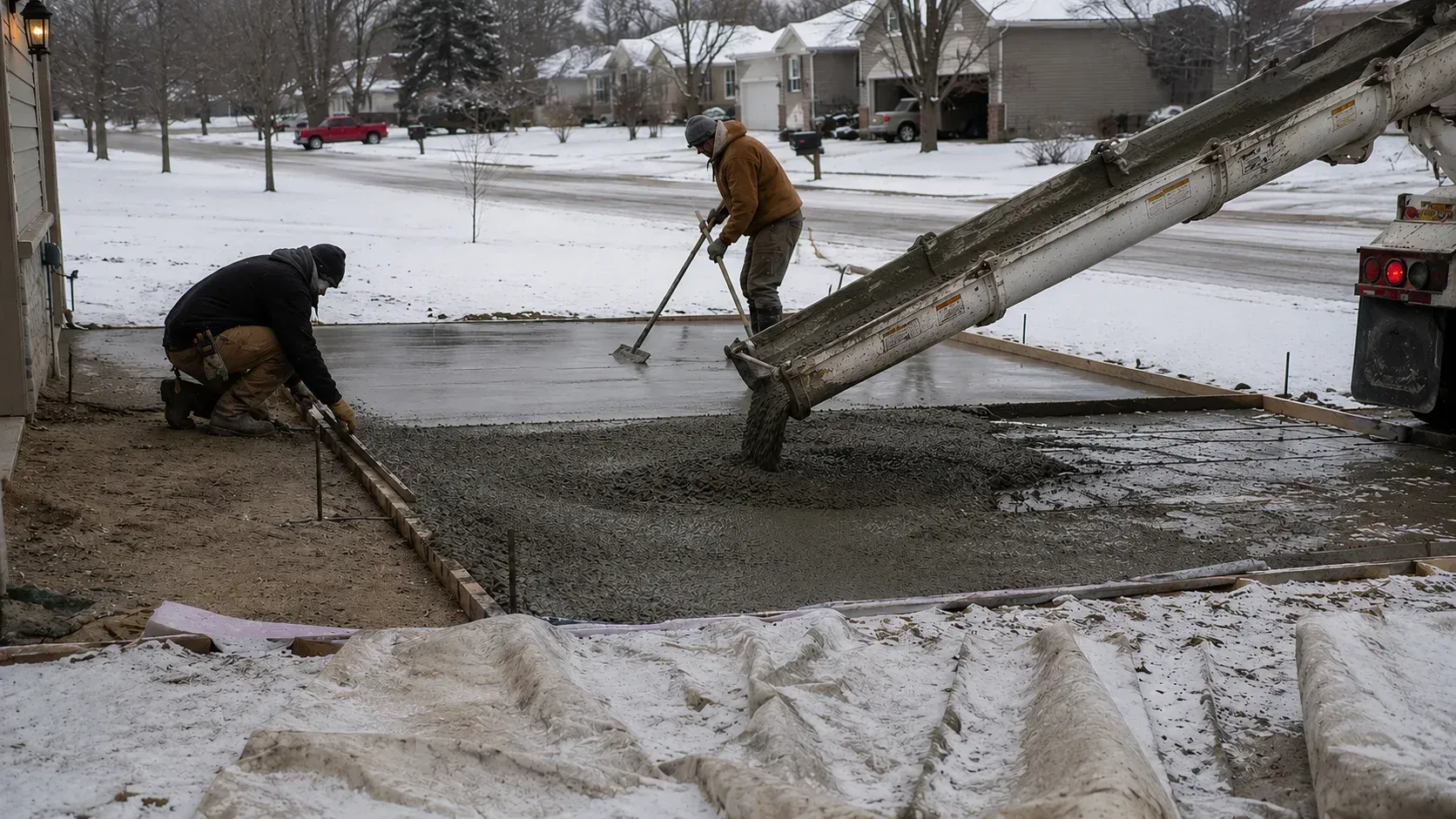
After the pour, insulating blankets trap the heat the concrete gives off as it cures. This is a simple, widely used way to protect a slab overnight when temperatures drop.
Chemical Accelerators
Certain admixtures speed up the curing reaction so the concrete gains strength faster and spends less time vulnerable to freezing. These are added to the mix and chosen based on the job.
Preparing the Ground
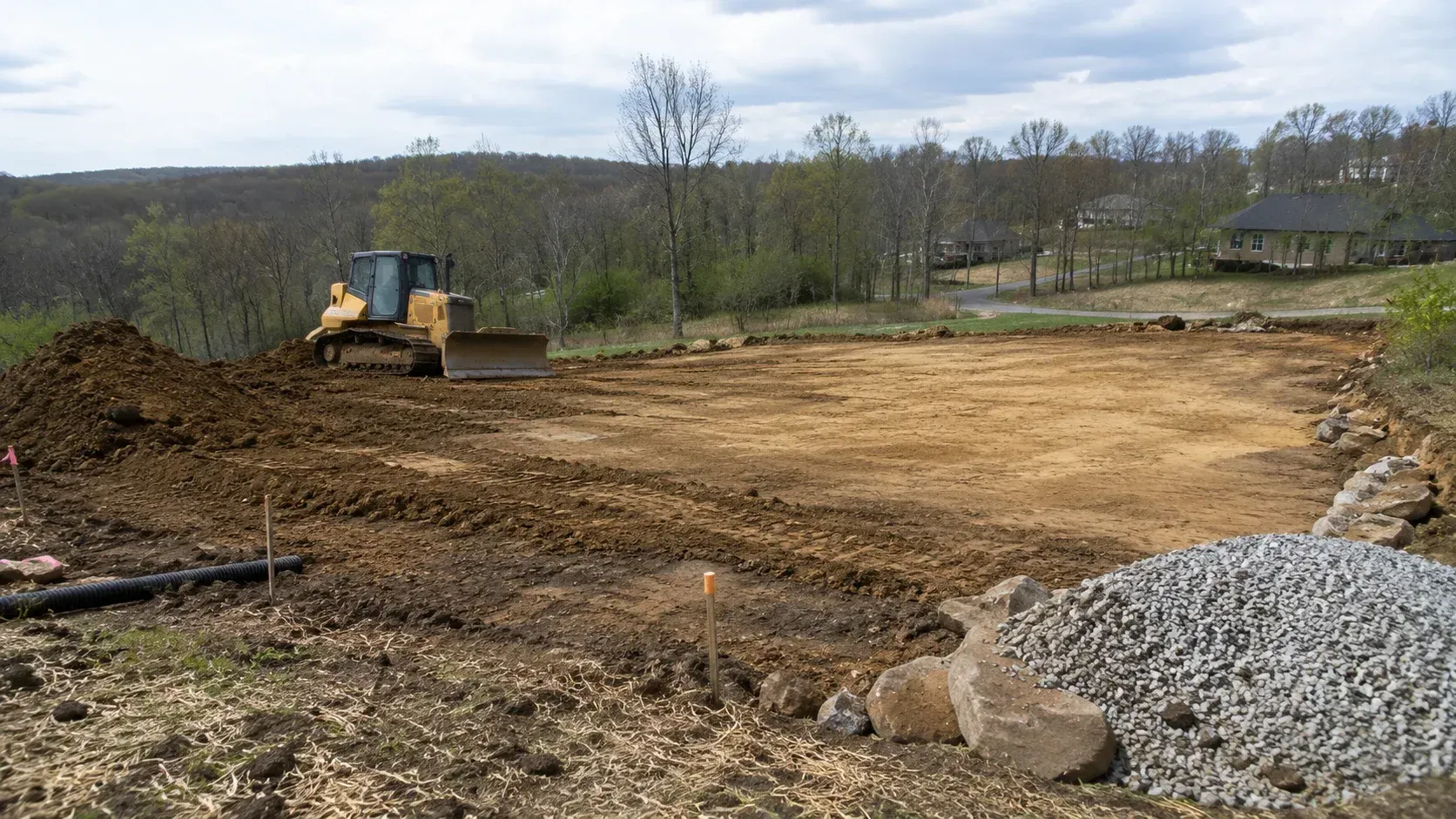
Concrete should never be placed on frozen ground. Frozen soil can thaw later and shift, and it also pulls heat out of the fresh concrete. Sometimes the ground needs to be thawed or protected before a pour, and good site work supports this. Getting the base right connects directly to
foundation excavation done with cold conditions in mind.
Temporary Enclosures and Heaters
For larger or more sensitive jobs, crews may build temporary enclosures and use heaters to hold a stable temperature around the concrete while it cures. This is more involved and adds cost, but it makes winter pours possible in harsher conditions.
Should You Pour Now or Wait? A Simple Framework
Deciding whether to pour in cold weather isn't a yes-or-no rule. It's a judgment call based on a few factors. This framework can help you think it through.
- How urgent is the project? If the work is time-sensitive, cold-weather methods may be worth the extra effort and cost. If it can wait, a warmer window is often simpler.
- What's the forecast? A brief cold snap with a warm stretch afterward is different from weeks of sustained freezing. The days right after the pour matter most.
- What's the ground doing? Frozen or saturated ground is a strong reason to pause. The base condition affects both the pour and the finished result.
- What's the budget? Cold-weather protection adds cost through materials, labor, and time. Weigh that against the value of finishing now.
- How large or complex is the pour? A small slab is easier to protect than a large foundation. Complexity raises the stakes on getting the conditions right.
No single factor decides it. The better choice usually becomes clear once you look at these together for your specific situation.
Common Misconceptions About Cold Weather Concrete
Common belief: Concrete can't be poured once it's below freezing. What's actually true: Concrete can be poured in freezing conditions with the right protection, though the effort and cost go up. The real issue is letting fresh concrete freeze before it sets, not the outside temperature alone.
Common belief: Once concrete looks hard, it's safe from the cold. What's actually true: A surface can look set while the concrete is still gaining strength underneath. It needs protection until it reaches a certain strength, not just until it feels firm.
Common belief: Adding extra water helps concrete in winter. What's actually true: Extra water generally weakens concrete and can make cold-weather problems worse. Mix adjustments are about admixtures and temperature control, not adding water.
Why the distinctions matter: acting on these misconceptions is how avoidable damage happens. Understanding what's really going on helps you ask better questions and avoid shortcuts that cause cracking or weakness later.
A Realistic Central Missouri Scenario
The following is a hypothetical example used to illustrate how the decision plays out. It is not a description of a specific project.
Imagine a homeowner near Versailles wants a new garage foundation poured in mid-November. The forecast shows daytime highs in the low 40s, nighttime lows near freezing, and a warmer stretch expected the following week.
In this situation, a crew might decide the pour is doable with protection: warming the mix, covering the slab with insulating blankets, and making sure the ground isn't frozen beforehand. Because a warmer stretch follows, the concrete has a reasonable window to gain early strength.
Now change one detail. Suppose the forecast instead showed a hard freeze for the next ten days with no relief. Here, waiting or building a heated enclosure becomes the more sensible path, since sustained freezing raises both the risk and the cost of protecting the pour.
Same project, different weather, different call. That's the practical reality of cold-weather concrete.
Risks, Limitations, and Trade-offs
Cold-weather concrete work comes with real trade-offs worth understanding before you commit.
The main risk is reduced strength if the concrete freezes too early, and this kind of damage usually can't be undone. It's a permanent quality issue, not a cosmetic one.
Cost is a limitation too. Heating, blankets, accelerators, and enclosures all add expense, so a winter pour can cost more than the same job in mild weather.
Timelines can stretch. Because curing slows in the cold, some steps that follow the pour may need to wait longer than they would in warmer months.
None of this makes winter concrete a bad idea. It just means the decision should account for conditions, budget, and how much protection the job realistically needs.
What Typical Online Advice Overlooks
A lot of general advice online focuses only on air temperature, as if the thermometer is the whole story. In practice, several factors matter just as much.
Ground condition is a big one. Frozen soil beneath a slab can cause problems even if the air warms up, and it's easy to overlook when you're only watching the forecast.
The days after the pour matter more than the day of the pour. Concrete is most vulnerable in its first day or two, so a warm afternoon means little if a hard freeze follows that night.
Scheduling around the season is another overlooked piece. Weather planning isn't unique to concrete, and the same thinking applies to earthwork, which is why crews often plan around
seasonal scheduling for the wetter and colder parts of the year.
Finally, generic advice rarely mentions that sometimes waiting is the smarter, cheaper option. Pushing a pour through in bad conditions can cost more in protection, or in repairs, than simply choosing a better window would have.
Conclusion
Concrete can be poured in cold weather in Central Missouri, and it happens regularly, but the temperature changes what the job requires. Fresh concrete has to be protected from freezing until it gains enough strength, and that means extra planning, the right methods, and honest attention to the forecast and the ground.
The most useful thing to take away is that this is a decision, not a rule. Sometimes cold-weather methods make a winter pour perfectly reasonable. Other times, waiting for a warmer stretch is the more practical and cost-effective path. Weighing urgency, forecast, ground conditions, budget, and project size gives you a clear-eyed way to choose what fits your situation rather than guessing.
Planning a Cold Weather Concrete Project in Central Missouri?
If you're weighing a fall or winter pour and want to understand what your specific project would involve, a conversation is a good starting point. Talking through the timeline, the site, and the forecast can help you decide whether pouring now or waiting makes more sense, with no pressure either way. You're welcome to
contact us with questions about pouring concrete in cold weather in Central Missouri and get straightforward guidance for your project.