Table of Contents
- Introduction
- Broom Finish vs Stamped Concrete at a Glance
- What Is a Broom Finish?
- What Is a Stamped Concrete Finish?
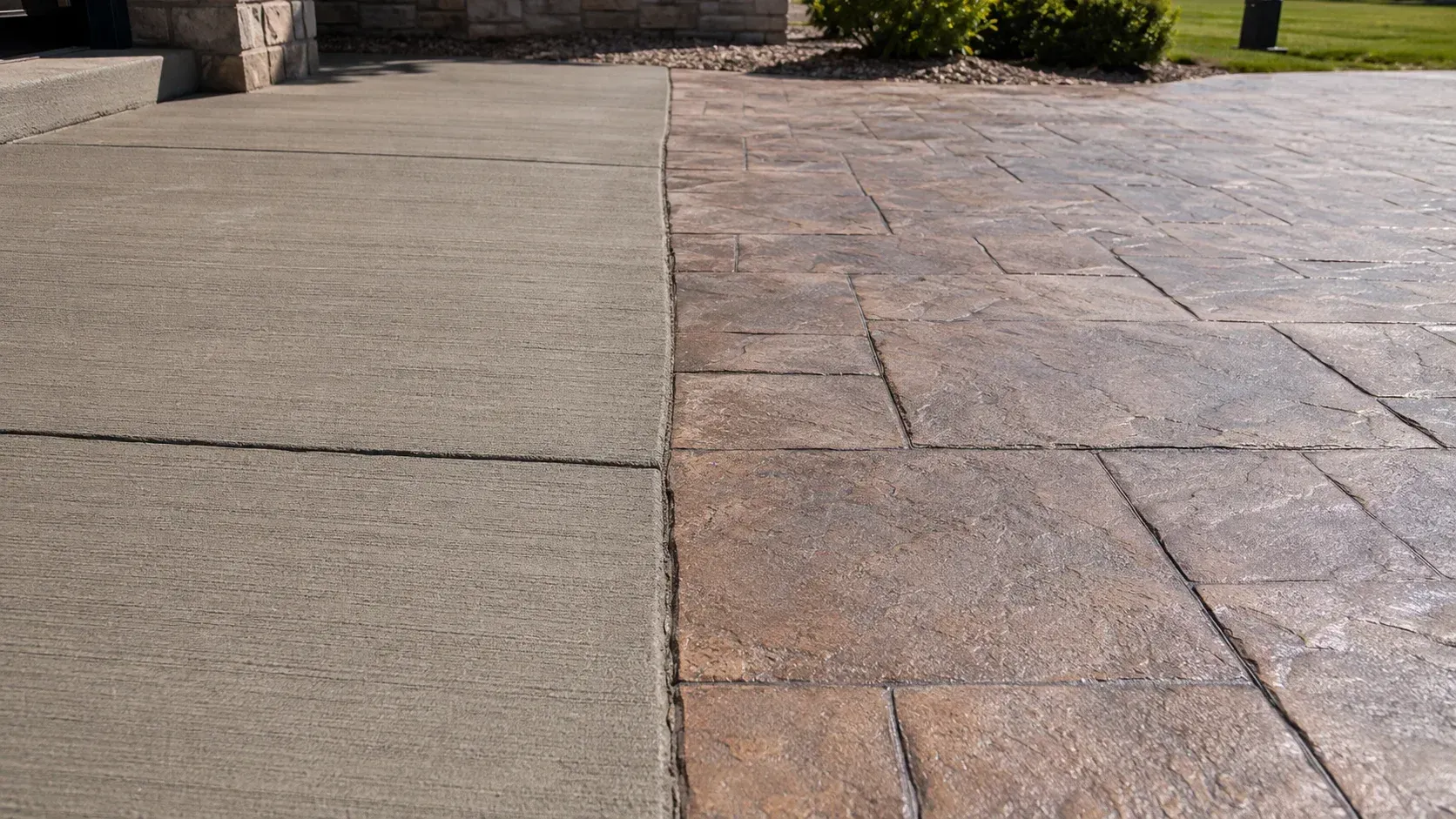
- Comparing the Two Side by Side
- Which Finish Fits Which Project
- What to Think About in Central Missouri
- Conclusion
- Talk Through Your Options
- Frequently Asked Questions
Key Takeaways
- A broom finish is a simple, textured surface made by dragging a broom across wet concrete, while a stamped finish is pressed with molds to mimic brick, stone, or tile.
- Broom finishes are usually more affordable and low maintenance, and stamped concrete costs more but offers a decorative, patterned look.
- Both can hold up well outdoors, but stamped surfaces often need periodic sealing to keep their appearance.
- Slip resistance, budget, and where the surface will go all play a part in choosing between them.
- The right choice depends on your priorities, not on one finish being better than the other.
Introduction
The main difference comes down to look and method: a broom finish is a plain, slightly textured surface made by pulling a broom across wet concrete, while a stamped finish is pressed with patterned molds to imitate brick, stone, wood, or tile. One is practical and understated, the other is decorative, and both are common choices offered through residential and commercial concrete services across Central Missouri.
If you're planning a driveway, patio, sidewalk, or pool deck, the finish you pick affects how the surface looks, feels underfoot, and holds up over the years. It also affects your budget and how much upkeep you'll take on. Knowing how these two options actually differ helps you match the surface to the space instead of guessing.
This guide breaks down both finishes in plain terms, compares them across the things that matter most, and points out where each one tends to shine.
Broom Finish vs Stamped Concrete at a Glance
Think of a broom finish as the everyday workhorse and stamped concrete as the dressed-up version. Both start as the same poured concrete. The difference is what happens in the final stage while it's still wet.
A broom finish adds light texture and not much else. Stamped concrete adds pattern, and often color, to make the surface resemble more expensive materials.
Neither is a "better" choice on its own. They just serve different goals, and that's the lens worth using as you read on.
What Is a Broom Finish?
A broom finish is exactly what it sounds like. After the concrete is poured and smoothed, a crew drags a stiff broom across the surface to create fine, even grooves.
Those grooves do more than one job. They give the surface a bit of grip, which helps with traction when the concrete is wet. They also hide minor imperfections better than a slick, smooth finish would.
This is one of the most common concrete finish options for a reason. It's straightforward to apply, budget-friendly, and holds up to daily use without much fuss.
The look is simple and neutral. If you want something functional that blends in rather than stands out, a broom finish tends to fit.
What Is a Stamped Concrete Finish?
Stamped concrete is a form of decorative concrete. While the surface is still workable, patterned mats or stamps press a design into it, creating the texture and shape of materials like flagstone, slate, brick, or wood plank.
Color is usually part of the process too. Pigments or stains are added to make the finish look closer to the real material it's imitating.
The appeal is the appearance. Stamped concrete can give you the look of natural stone or pavers at a different price point, without the individual pieces and joints.
It does ask for more skill to install well, and the finished surface generally needs a bit more care over time. More on that below.
Comparing the Two Side by Side
Here's how the two stack up across the factors homeowners usually care about.
Appearance
Broom finishes are plain and uniform. Stamped concrete offers pattern, texture, and color, so it reads as decorative rather than utilitarian.
If curb appeal is high on your list, stamped has the edge on looks. If you prefer a clean, understated surface, broom does the job.
Texture and Slip Resistance
The broom finish's grooves are designed to add traction, which is helpful on sloped or frequently wet surfaces. Stamped concrete can be smoother in spots, though a good sealer with an anti-slip additive can improve grip.
This matters most for areas like pool decks and walkways, where footing is a real concern.
Durability
Both finishes are durable when the concrete underneath is poured and cured properly. What sits below the surface matters as much as the finish on top, which is why solid prep and quality work on things like foundation pouring support the surface's long-term performance.
Stamped surfaces can show wear in the colored top layer over time, especially in high-traffic areas.
Maintenance
A broom finish is low maintenance. An occasional cleaning is usually enough.
Stamped concrete generally needs resealing every few years to protect the color and pattern from fading and wear. That's an ongoing cost and task to factor in.
Cost
Broom finishes are typically the more affordable option because the process is simpler and faster. Stamped concrete costs more due to the added materials, labor, and skill involved.
Exact pricing depends on the size of the area, the pattern, and site conditions, so it's best confirmed for your specific project.
Which Finish Fits Which Project
Different surfaces have different demands, and that often points you toward one finish or the other.
For a driveway, many homeowners lean toward a broom finish for its traction and value, though stamped is an option for a more custom look. If you're weighing a new one, understanding the base work behind a concrete driveway helps you plan the finish on top of it.
For patios and entryways, stamped concrete is popular because appearance tends to matter more in gathering spaces.
For sidewalks and utility areas, broom finishes are a practical, low-cost fit.
For pool decks, both work, but slip resistance becomes a priority, so the texture and any sealer used deserve extra attention.
What to Think About in Central Missouri
Local weather plays a role in any outdoor concrete decision. Central Missouri sees hot summers, cold winters, and freeze-thaw cycles that put stress on outdoor surfaces.
Sealing helps protect concrete from moisture and freeze-thaw damage, which is one more reason stamped surfaces benefit from regular upkeep. Broom finishes handle these swings well too, especially with proper installation.
Drainage and grading around the surface matter as much as the finish itself. Water that pools or sits against concrete can cause problems over time, no matter which finish you choose.
So the finish is one piece of the picture. How the surface is built and how water moves around it are just as important.
Conclusion
The choice between a broom finish and stamped concrete comes down to what you value most. A broom finish offers a practical, low-maintenance, budget-friendly surface with good traction. Stamped concrete offers a decorative, patterned look at a higher cost and with more upkeep.
Neither is the right answer for everyone. Appearance, slip resistance, maintenance, budget, and the specific surface all shape the decision, and weighing them honestly is what leads to a choice you'll be comfortable with. When you understand how each finish behaves, you're in a far better spot to pick the one that fits your project rather than the one that simply sounds nicer.
Talk Through Your Options
If you're comparing finishes for a driveway, patio, or other outdoor surface and want a clearer sense of what fits your space, a short conversation can help. Looking at the site and talking through your goals often turns a general question into a practical, informed decision.
There's no pressure here. Reaching out is simply a way to gather the details you need before committing to anything.