What's the Difference Between Land Clearing and Brush Hogging?

September 8, 2026

Share this article

Sustainable Excavation Practices

How Hoover’s Bobcat Service Ensures Quality Excavation

Hoover’s Bobcat Service specializes in foundation excavation tailored to Central Missouri’s unique soil conditions. Their team conducts thorough soil testing and site assessments before excavation, ensuring compliance with local building codes. They use advanced equipment to achieve proper trenching, grading, and compaction, meeting the 95% Standard Proctor Density compaction standard.


Services include:

  1. Foundation Excavation: Precise digging to required depths (30-36 inches below frost line).
  2. Concrete Footings Installation: Meeting Missouri’s building codes for structural integrity.
  3. Site Preparation: Soil testing, grading, and erosion control to protect your foundation.

Hoover’s Bobcat Service combines local expertise with sustainable practices to deliver durable foundations that stand the test of time.


Conclusion

Excavation is the critical first step in building a strong concrete foundation, especially in Central Missouri’s clay-heavy soil. Proper depth, compaction, and site preparation prevent common foundation problems like settlement and water damage. While some site prep tasks can be DIY, professional excavation ensures compliance with local codes and long-term stability.

For reliable foundation excavation services in Central Missouri, contact Hoover’s Bobcat Service today. Their expertise and equipment will help you build a foundation that lasts.

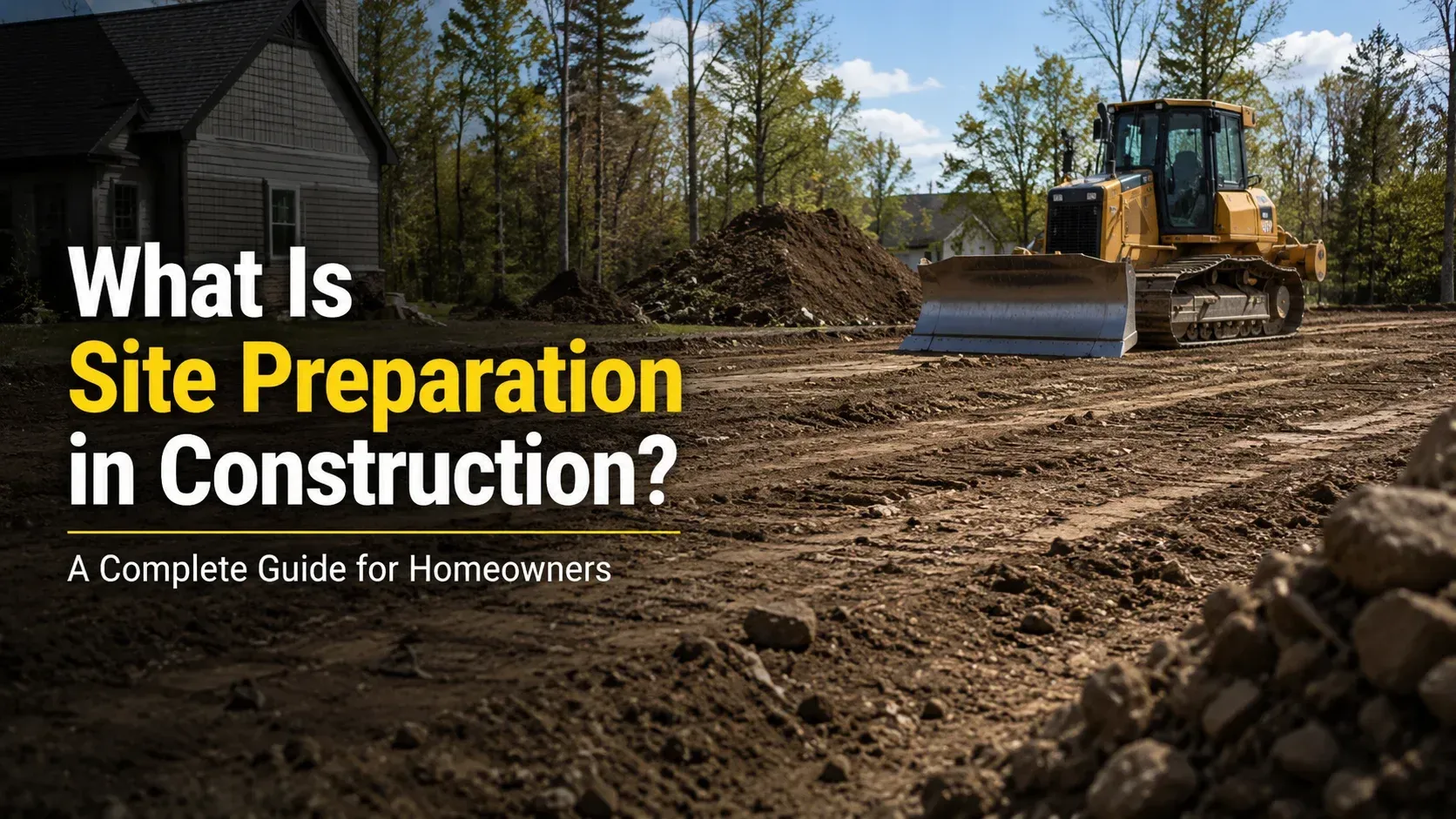
Heavy machinery clearing and grading soil for site preparation on a residential construction lot.
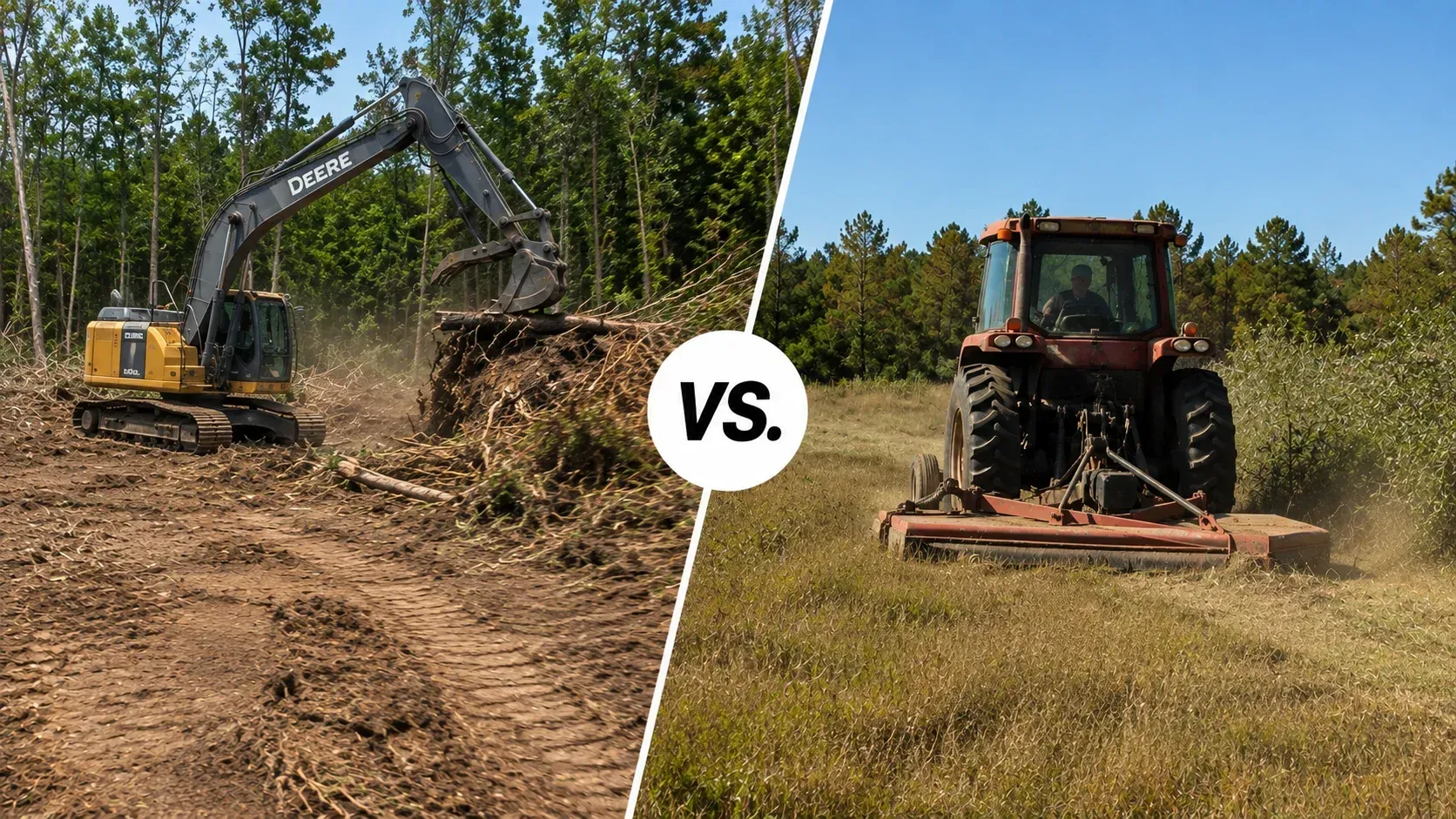
Heavy excavator performing land clearing next to a tractor brush hogging a field, illustrating what's the difference between land clearing and brush hogging?

Table of Contents

  1. Introduction
  2. What Is Land Clearing?
  3. What Is Brush Hogging?
  4. The Core Difference at a Glance
  5. When to Choose Each: A Practical Framework
  6. Common Misconceptions
  7. A Realistic Central Missouri Scenario
  8. Risks, Limitations, and Trade-offs
  9. What Typical Online Advice Overlooks
  10. Conclusion
  11. Frequently Asked Questions


Key Takeaways

  • Land clearing removes everything down to the ground, including trees, stumps, roots, and debris, to make land build-ready. Brush hogging cuts down overgrowth like tall grass, weeds, and light brush without removing roots.
  • Land clearing is the bigger, more permanent job. Brush hogging is more of a maintenance task you may repeat over time.
  • The right choice depends on what you plan to do with the land, not just how overgrown it looks.
  • Brush hogging is usually faster and less expensive, while land clearing takes more equipment, time, and cost.
  • On many properties, the two work together: brush hogging first to expose the ground, then land clearing for the areas that need to be fully cleared.

Introduction

The main difference is depth and purpose: land clearing removes everything on and below the surface, including trees, stumps, roots, and debris, while brush hogging simply cuts down overgrowth like tall grass, weeds, and light brush without pulling anything out of the ground. Put another way, land clearing prepares raw land to be built on or fully reclaimed, and brush hogging keeps overgrown areas cut back and manageable, which is why both often fall under the same excavation services offered across Central Missouri.


This distinction matters because choosing the wrong one wastes time and money. If you brush hog land that actually needs full clearing, you'll be back to square one when you try to build. If you pay for full land clearing on ground that only needed a good cut, you've spent more than necessary. Knowing which job fits your goal is the practical starting point.


This guide breaks down what each service involves, how they compare, and how to decide which one your property needs.


What Is Land Clearing?

Direct answer: Land clearing is the process of removing trees, stumps, roots, brush, rocks, and debris from a piece of land to prepare it for construction, farming, or another defined use.


It's a comprehensive job. The goal isn't just to make land look tidy, it's to get the ground itself ready for whatever comes next. That often means grading and leveling afterward so the site is stable and usable.


Land clearing usually calls for heavier equipment because it deals with roots and stumps, not just what's above the surface. Removing roots matters because leftover roots can regrow, rot, or interfere with foundations and grading later.


This is why land clearing is frequently the first phase of a larger project. Before a home, barn, or driveway goes in, the land often needs full site preparation, and clearing is where that process begins.


What Is Brush Hogging?

Direct answer: Brush hogging is the use of a heavy-duty rotary mower, often called a brush hog, to cut down tall grass, weeds, saplings, and light brush at or near ground level.


It's essentially large-scale mowing for rough terrain that a standard mower can't handle. A brush hog can chew through overgrowth that has gotten out of control, including fields, pastures, fence lines, and trails.


The key point is that brush hogging cuts, it doesn't remove. Roots stay in the ground, and stumps or large trees are left alone. That's why the overgrowth tends to come back, making brush hogging more of a recurring maintenance task than a one-time fix.


For landowners with acreage, it's a practical way to keep property from turning into an impassable thicket without committing to full clearing.


The Core Difference at a Glance

The simplest way to hold the two apart is this: brush hogging cuts what's on top, and land clearing removes what's on top and underneath.

Factor Land Clearing Brush Hogging
What it removes Trees, stumps, roots, brush, debris Grass, weeds, saplings, light brush
Depth Above and below ground Surface level only
Permanence Long-lasting Temporary, regrows
Typical purpose Prepare land to build or fully reclaim Maintain and control overgrowth
Equipment Heavier machinery Rotary brush mower
Relative cost Higher Lower
How often Usually once per area Repeated over time

This table is a starting point, not a rule. Some projects blur the line, which the next section addresses.


When to Choose Each: A Practical Framework

Deciding between the two comes down to your end goal. Walking through these questions usually makes the answer clear.


  1. What will the land be used for? If you're building, developing, or permanently converting the land, clearing is usually the right call. If you just want it usable and tidy, brush hogging may be enough.
  2. Do the roots and stumps need to go? If future work involves foundations, grading, or planting, leftover roots and stumps are a problem, which points to clearing. If they can stay, brush hogging works.
  3. Is this a one-time need or ongoing? A single build calls for clearing. Keeping a pasture or fence line in check is ongoing, which suits brush hogging.
  4. What's the density and size of the growth? Tall grass and light brush are brush-hog territory. Mature trees, dense woods, and large stumps need clearing.
  5. What's the budget and timeline? Brush hogging is generally faster and cheaper. Clearing is a larger investment, so it helps to match the spend to the actual goal.


Often the honest answer is "both." Many landowners brush hog first to see what's actually on the ground, then clear the specific areas that need it.


Common Misconceptions

Common belief: Brush hogging clears land for building. What's actually true: Brush hogging only cuts surface growth. The roots and stumps remain, so the ground is not build-ready. Construction sites almost always need full clearing.


Common belief: Land clearing means removing every tree on the property. What's actually true: Clearing is targeted to your plan. You can clear a building footprint or a driveway path while leaving the rest of the property wooded. It doesn't have to be all-or-nothing.


Common belief: Once brush is cut, it stays gone. What's actually true: Because roots stay in place, cut growth returns, often within a single season. Brush hogging keeps land in check but doesn't permanently remove the growth.


Why these distinctions matter: acting on the wrong assumption leads to redone work or unexpected costs. Matching the method to the goal from the start avoids both.


A Realistic Central Missouri Scenario

The following is a hypothetical example used to show how the decision plays out. It does not describe a specific project.


Imagine a landowner near Versailles buys ten acres that have sat untouched for years. Most of it is overgrown pasture with waist-high weeds, but one corner has mature trees where they want to eventually build a shop.


Here, the two services do different jobs. Brush hogging the overgrown pasture makes the land walkable and lets the owner actually see the terrain and any obstacles hidden in the growth. That's fast and relatively affordable.


The wooded corner is a different story. To build a shop there, the trees, stumps, and roots have to come out, followed by grading. That's a land clearing job, not a brush hogging one.


Same property, two needs, two services. Treating the whole ten acres as one type of job would either leave the build site unusable or overspend on land that only needed a cut.


Risks, Limitations, and Trade-offs

Each service has trade-offs worth understanding before you commit.


Brush hogging's main limitation is that it's temporary. You're managing growth, not eliminating it, so it becomes a recurring cost. It also can't handle large trees or stumps, and hidden obstacles like rocks or old fencing under tall growth can pose hazards during the cut.


Land clearing's trade-off is cost and disturbance. It's a bigger investment, and it changes the land more permanently. Removing tree cover can also affect drainage, soil erosion, and shade, so it's worth thinking through the downstream effects, not just the immediate goal.


There are also seasonal and environmental factors. Wet ground, nesting seasons, and local rules around tree removal or land disturbance can all affect timing and approach. These vary by situation, so it's wise to confirm what applies to your property.


What Typical Online Advice Overlooks

A lot of general content treats this as a simple either-or choice. In practice, several details get skipped.


The first is that the ground beneath overgrowth is often a mystery until it's cut. Brush hogging frequently comes first not as the final step, but as a way to reveal what clearing will actually involve. You can't fully plan clearing on land you can't see.


The second is that clearing has consequences beyond the cleared area. Removing trees and vegetation changes how water moves across a site. Without attention to drainage and grading, a freshly cleared area can develop erosion or pooling problems, which is why clearing and earthwork are usually planned together, sometimes alongside building pad preparation for the spot you intend to use.


The third is timing. Overgrown, wet ground behaves differently by season, and pushing this kind of work through poor conditions can be inefficient or damaging. Planning around seasonal timing tends to produce cleaner results than forcing a job at the wrong time of year.


Simplified advice rarely mentions any of this, but on real property these are the details that shape the outcome.


Conclusion

Land clearing and brush hogging solve different problems. Land clearing removes trees, stumps, roots, and debris to make land build-ready and is largely permanent. Brush hogging cuts back overgrowth at the surface to keep property manageable and is something you repeat over time.


The most useful way to decide is to start with your goal rather than the appearance of the land. If you're building or permanently converting the ground, clearing is usually the answer. If you're maintaining acreage or reclaiming an overgrown field, brush hogging often fits. And on many properties, using both in sequence is the practical, cost-aware path. Understanding the difference puts you in a position to spend on what your land actually needs instead of guessing.


Not Sure If You Need Land Clearing or Brush Hogging in Central Missouri?

If you're looking at an overgrown or wooded property and aren't sure which service fits, a conversation is a helpful first step. Talking through your goals and taking a look at the site can clarify whether land clearing, brush hogging, or a combination makes the most sense for your land, with no pressure either way. You're welcome to contact us with questions about land clearing services in Central Missouri and get straightforward guidance for your property.
Frequently Asked Questions

  • Is brush hogging the same as land clearing?

    No. Brush hogging cuts surface overgrowth like grass and light brush but leaves roots and stumps in place. Land clearing removes trees, stumps, roots, and debris to prepare land for building or full reclamation.

  • Can I build on land that has only been brush hogged?

    Generally no. Brush hogging leaves roots and stumps in the ground, so the site isn't build-ready. Construction usually requires full land clearing and grading first.

  • How often do you need to brush hog a property?

    It depends on growth and goals, but many landowners brush hog once or a few times per growing season. Because roots remain, the growth returns, so it's a recurring task.

  • Which is cheaper, land clearing or brush hogging?

    Brush hogging is usually less expensive because it only cuts surface growth. Land clearing costs more since it involves heavier equipment, root and stump removal, and often grading.

  • Do I need both services on the same property?

    Sometimes. Many properties benefit from brush hogging to expose the ground first, then land clearing on the specific areas that will be built on or fully reclaimed. It depends on your plans.

Recent Posts

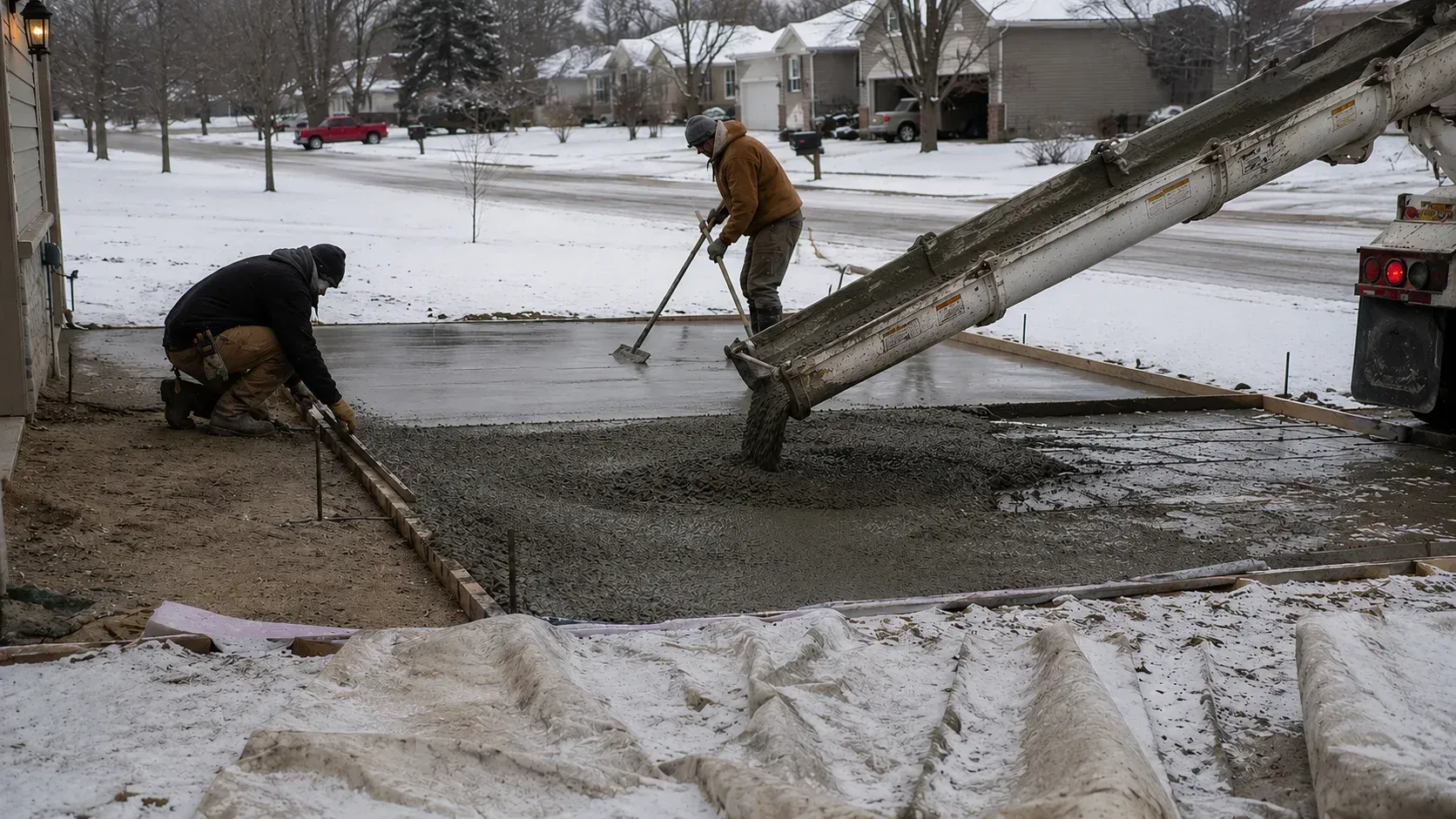
Pouring concrete outdoors in winter: can you pour concrete in cold weather in Missouri?
September 8, 2026
Learn whether you can pour concrete in cold weather in Central Missouri, how crews protect fresh concrete, and when it makes sense to wait for warmer days.
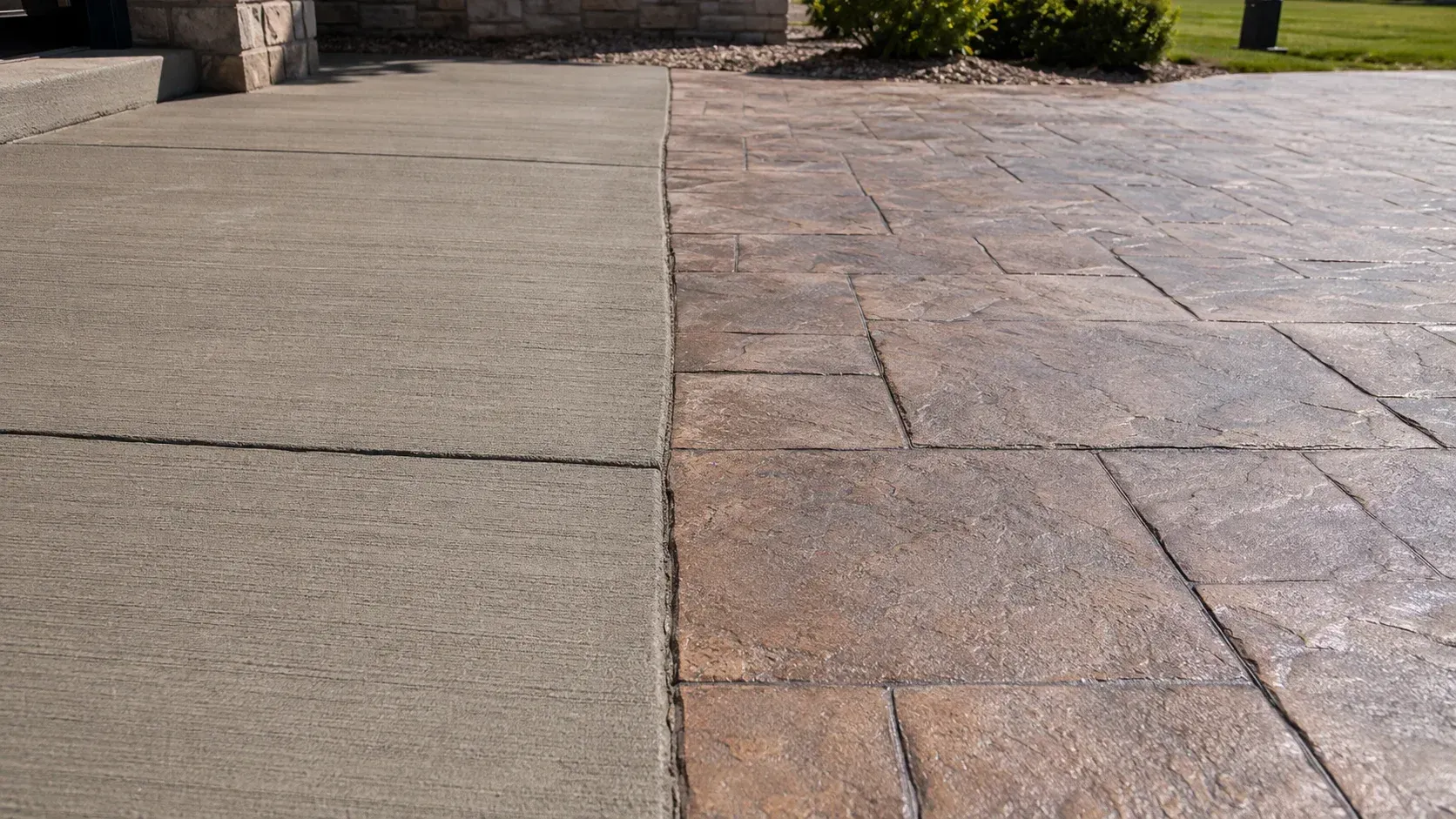
Side-by-side comparison: what's the difference between a broom finish and a stamped concrete finish?
August 17, 2026
Compare broom finish and stamped concrete finishes by texture, slip resistance, durability, maintenance, and cost to choose the right one for your project.
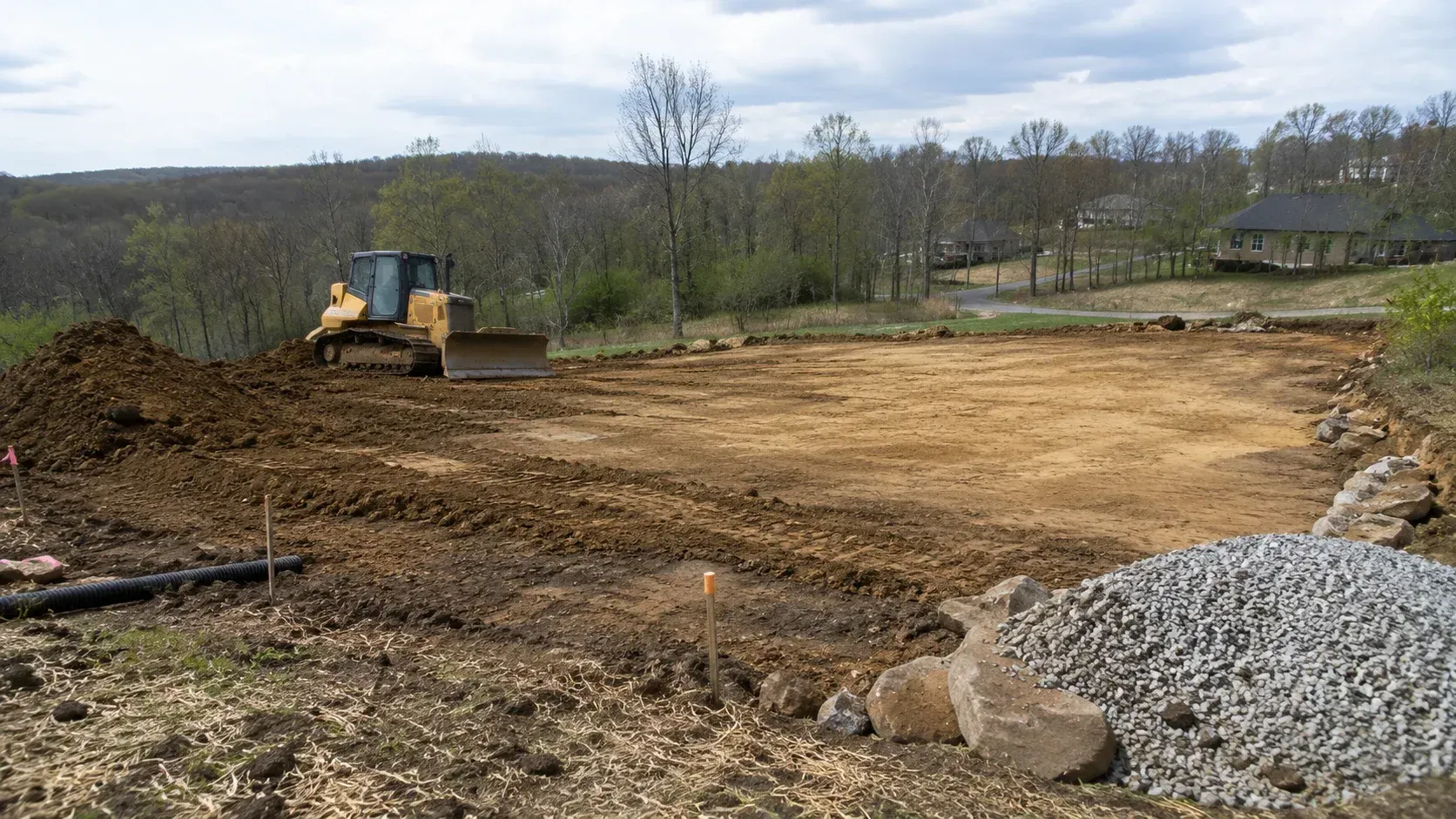
Yellow bulldozer grading soil: how much does it cost to excavate a building pad.
By Zar Espiritu August 17, 2026
This guide explains what affects the cost of excavating a building pad in Central Missouri, including soil conditions, site size, grading, depth, and access.