Table of Contents
- Introduction
- What Building Pad Excavation Actually Involves
- The Main Factors That Affect the Cost
- A Closer Look at Soil Conditions in Central Missouri
- How the Excavation Process Usually Works
- Why Proper Site Prep Is Worth the Attention
- Common Extra Costs to Keep in Mind
- Conclusion
- Talk It Through Before You Break Ground
- Frequently Asked Questions
Key Takeaways
- Building pad excavation cost is not a flat number. It shifts with site size, soil type, how much grading is needed, and how easy the land is to reach.
- Most residential pads in Central Missouri fall into a general range, but the only reliable figure comes from an on-site look at your specific property.
- Soil conditions matter more than people expect. Rock, clay, and wet ground all change the amount of work involved.
- Good site prep protects the foundation that goes on top of it, which is why the cheapest quote is not always the smart choice.
- Timing and weather can affect both the schedule and the final price, especially during Missouri's wetter months.
Introduction
There is no single price tag for excavating a building pad, but most residential pads in Central Missouri tend to land somewhere in the low thousands of dollars, with many projects running between roughly $1,500 and $5,000 depending on the site. Larger commercial pads, difficult terrain, or heavy grading can push that number higher, which is why solid site preparation starts with an honest look at the ground you're working with.
If you're planning to build a house, garage, barn, or shop, the pad is the part almost nobody sees once construction is done. It's also the part that everything else depends on. Getting a clear picture of what drives the cost helps you budget without surprises and ask better questions before any dirt gets moved.
This guide walks through the factors that shape building pad excavation cost, explains how the work usually goes, and points out where prices tend to climb. The goal is simple: help you understand what you're paying for.
What Building Pad Excavation Actually Involves
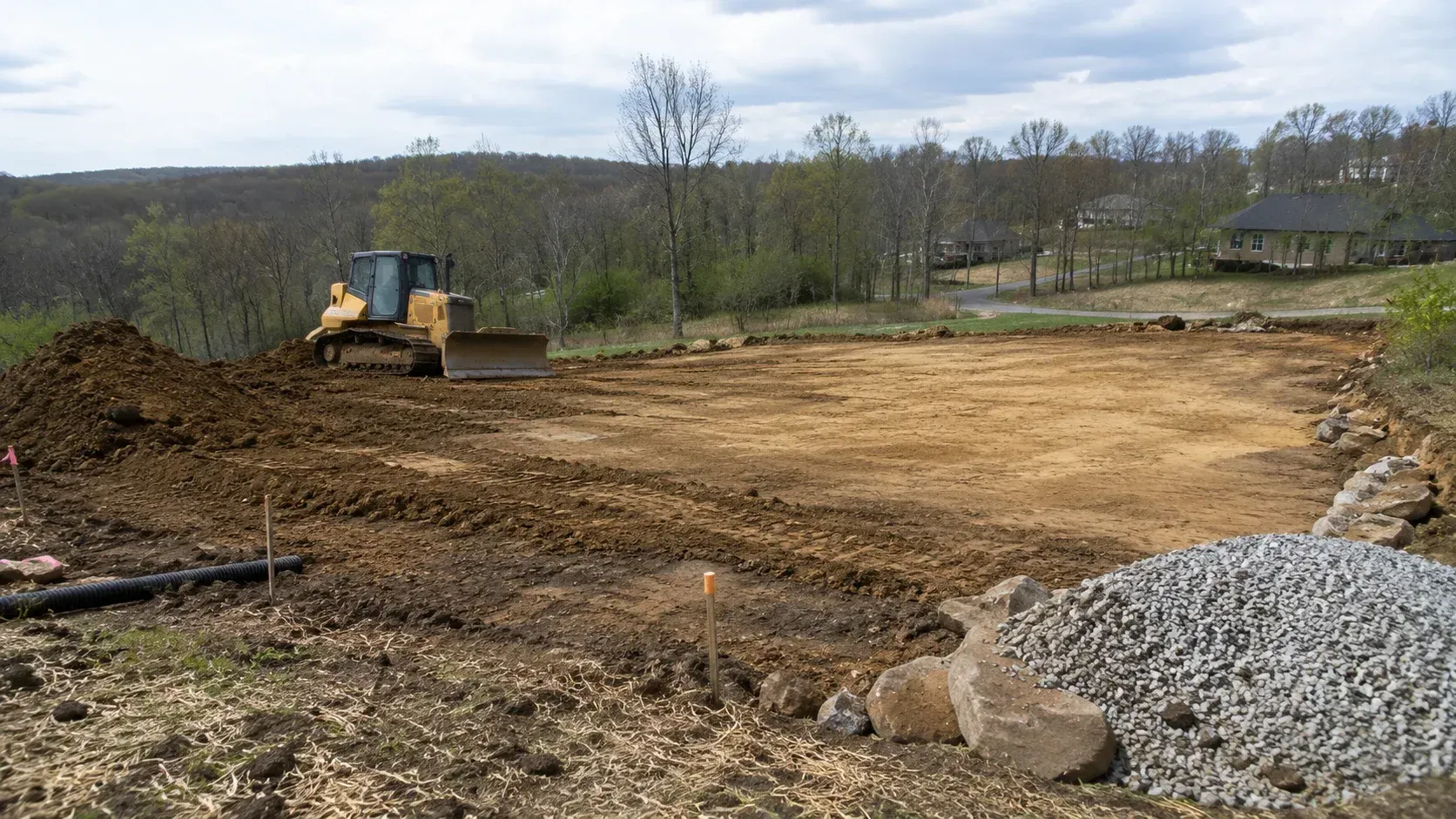
A building pad is the flat, compacted base your structure sits on. Excavating one means clearing the area, removing loose or unsuitable material, shaping the ground, and compacting it so it can carry weight without settling.
It sounds straightforward, and on a flat, dry lot it can be. But every piece of land behaves differently. A gentle slope, a patch of clay, or a few large rocks can all change how long the job takes and how much material has to move.
That's the short version of why the cost to level a building site varies so much from one property to the next. Two lots on the same road can need very different amounts of work.
The Main Factors That Affect the Cost
Here's where most of the price comes from. No single item tells the whole story, but together these give you a realistic sense of what to expect.
Site Size and Shape
Bigger pads take more time, more fuel, and more material. That part is obvious. What's less obvious is that an oddly shaped or tight lot can cost more per square foot than a large, open one, simply because the equipment has less room to work efficiently.
Soil and Ground Conditions
Soft, workable soil is quick to shape. Rock, dense clay, or saturated ground is not. If the crew hits rock that needs breaking, or clay that needs hauling off and replacing, the labor and disposal add up.
Grading and Leveling
A lot that already sits fairly level needs less shaping. A sloped or uneven site needs cutting in some spots and filling in others, and fill material often has to be brought in and compacted. The steeper the grade, the more of this you can expect.
Excavation Depth
How deep the crew has to dig depends on your building type and whether you're adding features like a crawl space or footings. Deeper work means more material removed and, sometimes, more attention to the surrounding ground so nothing shifts.
Equipment and Site Access
If a machine can drive straight onto the lot, great. If it has to navigate a narrow gate, cross soft ground, or work around existing trees and structures, the job slows down. Access issues quietly affect the building pad excavation timeline more often than people realize.
Hauling and Material
Dirt doesn't disappear. Excess soil usually has to be hauled off, and if the site needs fill or gravel, that has to be trucked in. Distance to and from the site plays into the total site prep cost here.
A Closer Look at Soil Conditions in Central Missouri
Central Missouri ground is a mixed bag. Some properties have workable topsoil over a stable base, while others sit on clay-heavy soil or shallow bedrock that shows up a foot or two down.
Clay is a common one around here. It holds water, expands and shrinks with moisture, and can be tricky to compact properly. When a site has a lot of it, the crew may need to remove some and replace it with better material to build a stable pad.
Wet ground is another factor. After a rainy stretch, soil that was firm can turn soft, which affects both compaction and the machines trying to work on it. This is one reason Missouri's wet season can influence when a project gets scheduled and how smoothly it runs.
None of this is a problem you can't plan around. It just helps to know it exists before you assume every lot is the same.
How the Excavation Process Usually Works
While every job has its own quirks, most building pad projects follow a similar path.
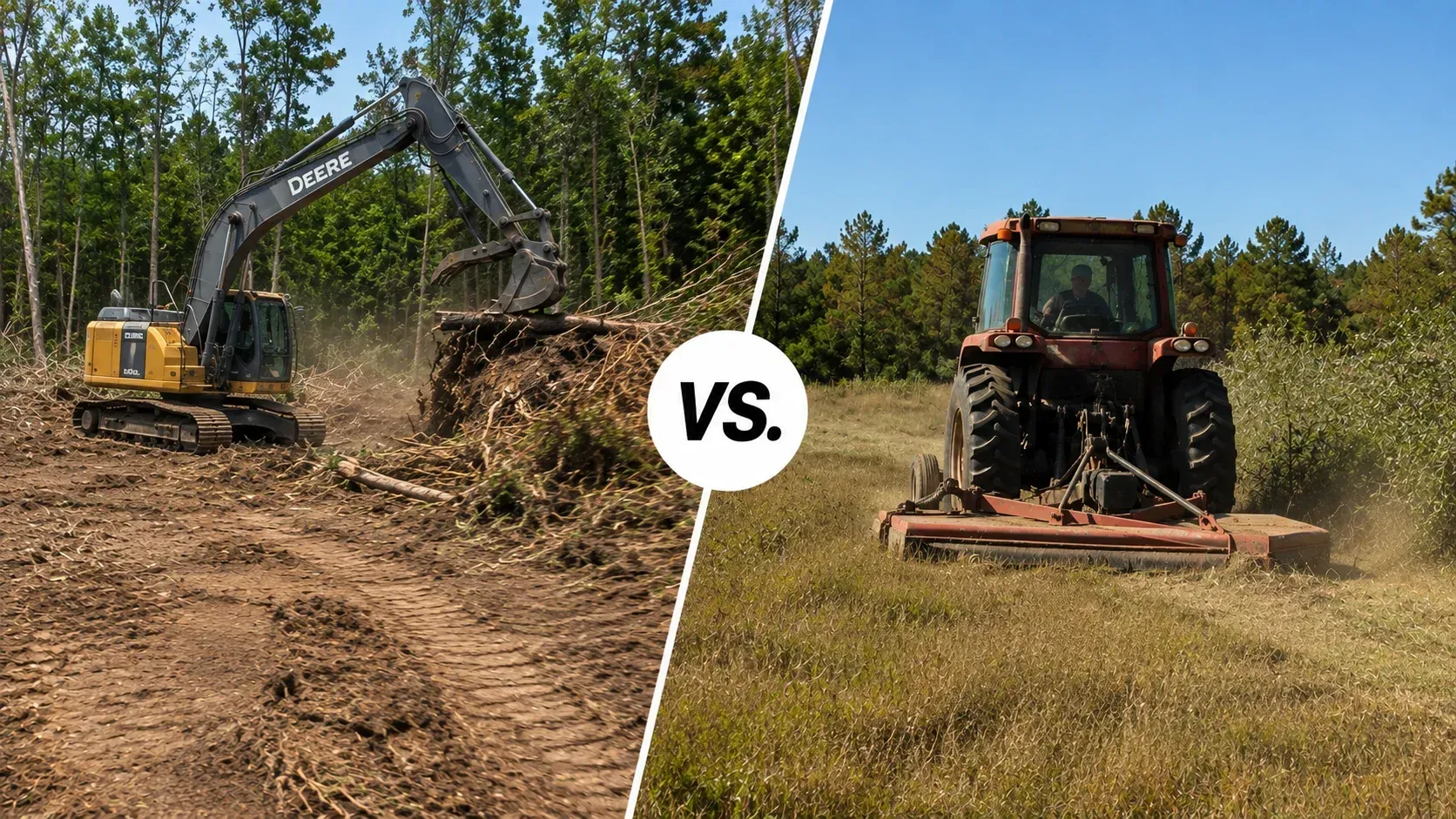
First comes clearing. Brush, small trees, roots, and debris get removed so the crew can see and reach the actual ground.
Next is stripping and cutting. The topsoil is often set aside, and the crew begins shaping the pad by cutting down high areas and filling low ones.
Then comes compaction. Loose fill gets packed in layers so the finished pad is firm and even. This step matters a lot, because a poorly compacted pad can settle later and cause problems for whatever sits on top.
Finally, the pad is graded to the right elevation and slope, often with drainage in mind so water moves away from the future structure instead of pooling against it.
Why Proper Site Prep Is Worth the Attention
It's tempting to treat the pad as the boring first step and rush past it. The trouble is that the foundation, and everything above it, relies on what's underneath.
A pad that isn't level or well compacted can lead to cracks, uneven settling, or drainage headaches down the road. Fixing those after a building is up costs far more than doing the groundwork right the first time.
This connection between the ground and the structure is also why careful foundation excavation tends to go hand in hand with pad work. The two support each other. When the base is stable, the rest of the project has a much easier time.
So when you compare quotes, it's worth looking past the bottom line and asking what's actually included in the site prep.
Common Extra Costs to Keep in Mind
A few things aren't always part of a basic estimate but come up often enough to plan for.
Permits and inspections can apply depending on your county and project. It's worth checking local requirements early.
Tree and stump removal on a wooded lot adds time. Large stumps in particular can be stubborn.
Rock removal is a real possibility on some Central Missouri sites, and it's hard to predict exactly until the crew starts digging.
Fill material and gravel, if your site needs them, are a common line item that catches people off guard when the natural soil isn't suitable.
Knowing these exist doesn't mean you'll face all of them. It just keeps the final invoice from feeling like a surprise.
Conclusion
The cost to excavate a building pad in Central Missouri comes down to a handful of practical factors: how big the site is, what the soil is like, how much grading it needs, how deep the work goes, and how easy the land is to reach. There's no universal number, because no two properties are quite the same.
What stays consistent is the value of getting the groundwork right. A stable, well-prepared pad protects the foundation and the structure above it, and that protection is hard to put a price on. Understanding these factors puts you in a stronger position to plan your budget, read a quote clearly, and make a decision that fits your project rather than just the lowest number on paper.
Talk It Through Before You Break Ground
If you're weighing a new build and want a clearer sense of what your specific site involves, a conversation is often the most useful first step. An on-site look at your property can turn a rough guess into a realistic picture of the work, the timeline, and the considerations that matter for your lot.
There's no pressure and no obligation. Reaching out simply helps you gather the information you need to make an informed choice about your project.