What Is a Rain Garden and How Does It Help With Stormwater Management at Home?
Sustainable Excavation Practices
How Hoover’s Bobcat Service Ensures Quality Excavation
Hoover’s Bobcat Service specializes in foundation excavation tailored to Central Missouri’s unique soil conditions. Their team conducts thorough soil testing and site assessments before excavation, ensuring compliance with local building codes. They use advanced equipment to achieve proper trenching, grading, and compaction, meeting the 95% Standard Proctor Density compaction standard.
Services include:
- Foundation Excavation: Precise digging to required depths (30-36 inches below frost line).
- Concrete Footings Installation: Meeting Missouri’s building codes for structural integrity.
- Site Preparation: Soil testing, grading, and erosion control to protect your foundation.
Hoover’s Bobcat Service combines local expertise with sustainable practices to deliver durable foundations that stand the test of time.
Conclusion
Excavation is the critical first step in building a strong concrete foundation, especially in Central Missouri’s clay-heavy soil. Proper depth, compaction, and site preparation prevent common foundation problems like settlement and water damage. While some site prep tasks can be DIY, professional excavation ensures compliance with local codes and long-term stability.
For reliable foundation excavation services in Central Missouri, contact Hoover’s Bobcat Service today. Their expertise and equipment will help you build a foundation that lasts.
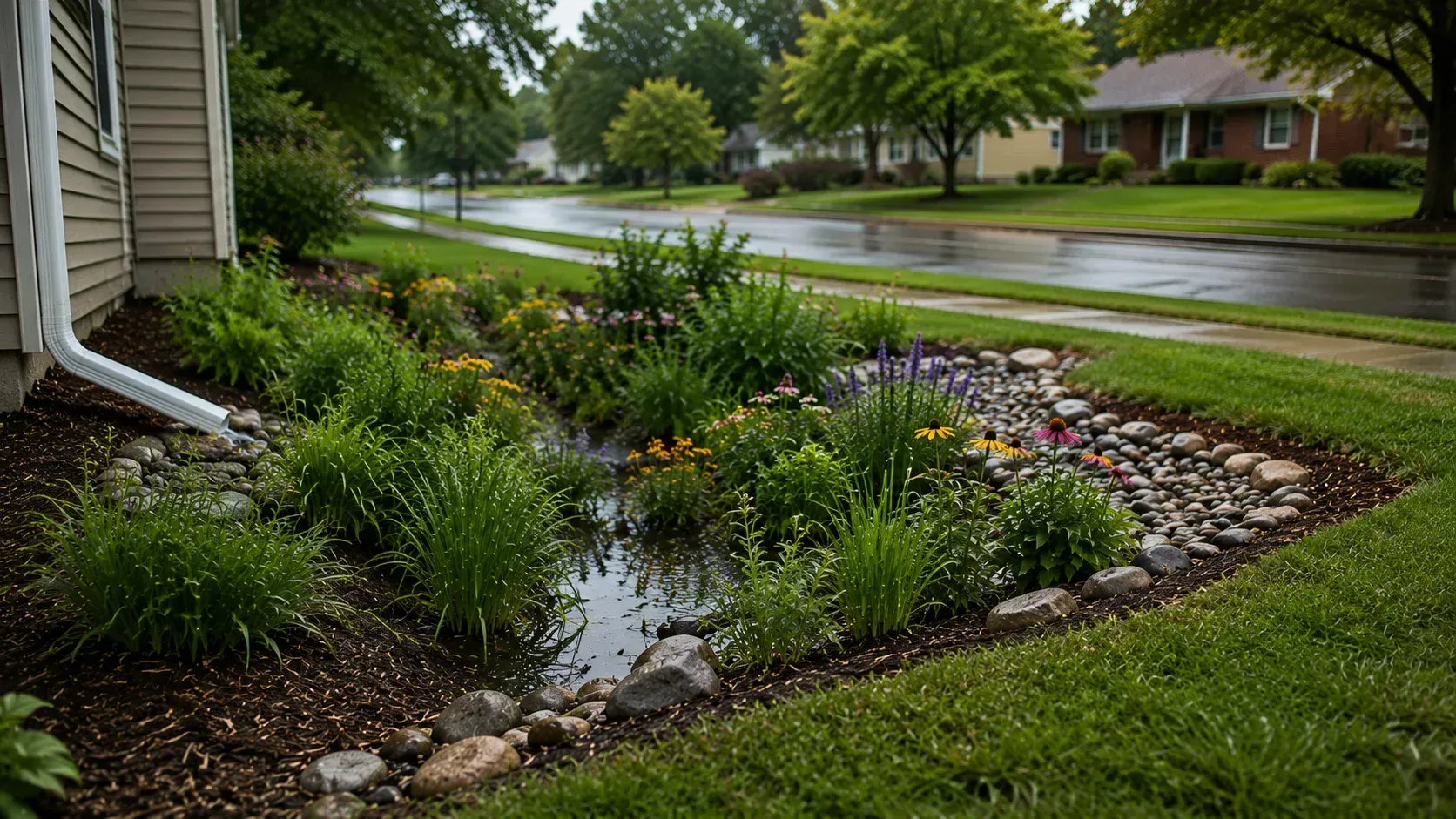
Table of Contents
- Introduction
- What Is a Rain Garden?
- Why Stormwater Management Matters for Versailles Homeowners
- How a Rain Garden Actually Works
- Where Rain Gardens Fit Into a Broader Drainage Plan
- Site Conditions That Affect Rain Garden Performance
- Soil Type and Drainage in Central Missouri
- Common Mistakes When Planning a Rain Garden
- When a Rain Garden Isn't Enough
- Conclusion
- Frequently Asked Questions
Key Takeaways
- A rain garden is a shallow, planted depression designed to collect and slowly absorb rainwater runoff from roofs, driveways, and other hard surfaces.
- Versailles, Missouri receives roughly 45 inches of rain a year, with the heaviest rainfall concentrated in spring and early summer.
- Rain gardens reduce the speed and volume of water moving across a yard, but they are not a substitute for proper grading or drainage work.
- Soil type, slope, and existing drainage patterns all affect whether a rain garden will function as intended on a given property.
- Homeowners considering a rain garden should evaluate site conditions first, since poor placement can lead to standing water instead of absorption.
What Is a Rain Garden?
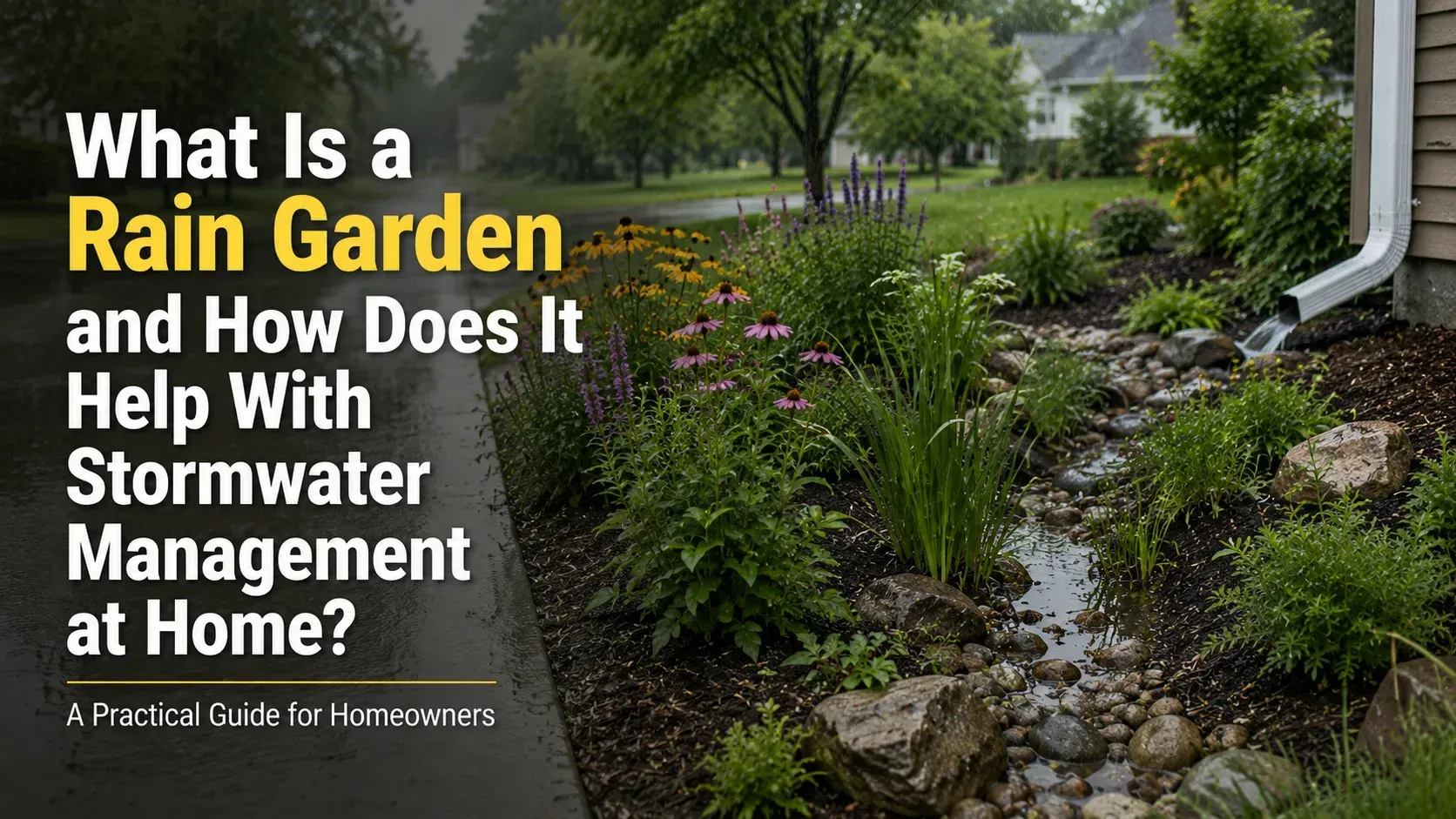
A rain garden is a planted, slightly sunken area of a yard designed to collect runoff from a roof, driveway, or patio. Water pools in the depression after a storm and is absorbed into the soil over a period of hours, rather than running off immediately. The plants used are typically deep-rooted, water-tolerant native species that can handle both wet and dry conditions.
It's worth being clear about what a rain garden is not. It is not a pond, and it is not meant to hold standing water for more than a day or two after rain. If water sits longer than that, the design or placement usually needs review.
Why Stormwater Management Matters for Versailles Homeowners
Versailles sits in Morgan County, an area that receives an average of around 45 inches of rain annually, with May typically being the wettest month. That volume of rainfall, especially when it arrives in short, heavy bursts, puts pressure on yards, driveways, and building foundations that aren't graded to handle it.
Poorly managed stormwater can contribute to several issues over time:
- Soil erosion along slopes and driveways
- Water pooling near foundations
- Soggy or unusable patches of lawn
- Sediment and debris washing into low areas or culverts
None of these problems happen overnight. They tend to build gradually, which is part of why stormwater planning is easy to overlook until a yard or driveway is already showing signs of wear.
How a Rain Garden Actually Works
A functioning rain garden relies on a few basic principles working together. The garden is positioned to intercept runoff before it reaches a problem area, like a foundation wall or a low spot that stays wet. The depression is shallow enough that water doesn't pool too deep, usually four to eight inches, and the soil underneath needs to drain at a reasonable rate.
The plants play a supporting role rather than the main one. Their root systems help create channels in the soil that improve infiltration over time, and they help take up some of the water through normal growth. But the underlying soil and grading do most of the work. If the ground beneath a rain garden doesn't drain well, the garden won't either, regardless of what's planted in it.
Where Rain Gardens Fit Into a Broader Drainage Plan
A rain garden is one tool among several for managing water on a property, not a complete solution on its own. It works best as part of a layout that also accounts for overall grading, gutter placement, and where water naturally wants to travel across the land.
For homes built on a slope, or properties where water already collects in a specific area after rain, the grading of the lot often needs to be addressed before a rain garden will function properly. In some cases, this means reshaping part of the yard so water is directed toward the rain garden rather than around it.
Anyone planning excavation or grading work as part of a larger drainage project can review the
land grading services
available locally to understand how site grading and rain garden placement typically work together.
Site Conditions That Affect Rain Garden Performance
Several factors determine whether a particular spot in a yard is a good candidate for a rain garden.
Distance From the Foundation
Most guidance recommends placing a rain garden at least 10 feet from a home's foundation. Closer than that, and infiltrating water can work its way toward the foundation instead of away from it, which runs counter to the point of building one in the first place.
Slope of the Yard
A gentle slope, generally between 1 and 12 percent grade, allows water to flow into the garden without pooling too fast or draining away before it has a chance to soak in. Very flat yards may need slight regrading to create that flow. Steep slopes can cause water to move too quickly, eroding the garden's edges.
Existing Drainage Patterns
Before placing a rain garden, it helps to observe where water already collects during and after a storm. A spot that floods within minutes of heavy rain may indicate poor underlying drainage, which a rain garden alone won't resolve.
Soil Type and Drainage in Central Missouri
Soil composition has a direct effect on infiltration rates, and it varies across Morgan County and the surrounding region. Clay-heavy soils, which are common in parts of Central Missouri, drain more slowly than sandy or loamy soils. That doesn't rule out a rain garden, but it does mean the design needs to account for slower infiltration, often by amending the soil or sizing the garden larger to compensate.
A simple way to get a rough sense of drainage is a percolation test: dig a hole about a foot deep, fill it with water, and observe how long it takes to drain. If water is still standing after several hours, that area may need soil amendment or a different drainage approach before a rain garden will perform as expected.
Common Mistakes When Planning a Rain Garden
A few recurring issues show up when rain gardens don't perform the way homeowners expect.
- Placing it too close to a structure. This increases the risk of water reaching a foundation instead of moving away from it.
- Underestimating the volume of runoff. A rain garden sized for a small patio won't handle the runoff from an entire roof.
- Ignoring the slope leading into the garden. If water can't reach the garden efficiently, it will keep following its old path.
- Skipping a percolation test. Without knowing how the soil drains, it's difficult to size or place the garden correctly.
These aren't failures of the concept itself, just reminders that site assessment matters more than the planting plan.
When a Rain Garden Isn't Enough
Rain gardens are useful for managing moderate runoff from roofs and small hard surfaces, but they have limits. Properties with significant water issues, such as a basement that takes on water during heavy rain, a driveway that consistently washes out, or a yard with serious erosion, usually need broader site work before a rain garden would make sense as an addition.
In those situations, the underlying grading, drainage, or even foundation excavation may need attention first. Homeowners dealing with water near a foundation or basement area may find it useful to understand how foundation excavation work is approached in Central Missouri, since stable, well-graded ground around a foundation is often a prerequisite for any smaller drainage feature to work as intended.
It's also worth noting that timing matters for any excavation or grading work tied to a drainage plan. Central Missouri's wet season and spring thaw period can affect when this kind of work is practical, which is covered in more detail in this overview of excavation scheduling considerations for the region.
Conclusion
Rain gardens offer a way to slow down and absorb runoff from a roof or driveway, but they depend heavily on correct placement, adequate slope, and soil that can actually accept water at a reasonable rate. For homeowners in Versailles, Missouri, where rainfall is concentrated in the spring and early summer months, understanding these conditions before installing a rain garden is more useful than guessing at a design.
A rain garden works best as part of a broader understanding of how water moves across a property, not as an isolated fix. Grading, existing drainage patterns, and soil type all play a role in whether the feature performs the way it's intended to. None of this requires assuming the worst about a property's drainage, but it does call for a clear-eyed look at the site before committing to a plan.
Want Clarity on Your Property's Drainage Before You Plan a Rain Garden?
If you're a homeowner in the Versailles area trying to understand how water moves across your yard, a short conversation can help clarify what's actually going on with your site before you commit to a project.
This isn't about selling a solution. It's about getting a clear, honest read on your property's grading and drainage so you can make an informed decision.
You can reach out to Hoover's Bobcat Service to ask questions or learn more about how grading and drainage work is typically approached in Central Missouri.
Frequently Asked Questions
Does a rain garden prevent basement flooding?
A rain garden can help reduce surface runoff near a home, but it is not designed to solve basement flooding caused by groundwater or foundation drainage issues. Those problems typically require a separate assessment of grading and foundation drainage.
How big should a rain garden be?
Sizing depends on the amount of roof or paved area draining into it, along with the soil's infiltration rate. As a general guideline, many rain gardens are sized at roughly 20 to 30 percent of the square footage of the surface area they're collecting runoff from, though local soil conditions can shift that estimate.
Can I build a rain garden on clay soil?
Yes, but clay soil drains more slowly, so the garden may need to be larger, amended with compost or sand, or designed with an overflow path for heavier storms. A percolation test is the best way to understand what a specific yard's clay soil can handle.
How long does it take for water to drain from a rain garden?
Most rain gardens are designed to drain within 24 to 48 hours after a storm. If water is still standing well beyond that, it may point to a sizing or soil issue that needs to be addressed.
Do rain gardens attract mosquitoes?
Properly designed rain gardens drain quickly enough that they don't typically provide standing water long enough for mosquitoes to breed, which generally requires water sitting for about a week or more. Slow-draining or poorly sized gardens are more likely to create that risk.
Is a rain garden the same as a retention pond?
No. A retention pond is designed to hold water for longer periods and is usually much larger. A rain garden is shallow and meant to absorb water within a day or two, not store it.
Do I need a permit to install a rain garden in Versailles, MO?
Permit requirements vary depending on the size of the project and whether it involves grading or altering existing drainage patterns. Homeowners should check with local Morgan County or city authorities before starting significant earthwork.
Recent Posts